Stress Recovery

Exploring supportive approaches to recovery, resilience, nervous system wellness, and sustainable well-being in modern life.

Stress is a natural part of life, but recovery is equally important.

As conversations around burnout, emotional fatigue, nervous system overload, and cognitive wellness continue to grow, stress recovery is becoming an increasingly important part of modern wellness discussions.

Many individuals today experience ongoing stress without enough opportunities for meaningful restoration. Over time, limited recovery may affect emotional wellness, resilience, focus, sleep, energy, and overall well-being.

Stress recovery focuses on creating supportive habits, recovery rhythms, and wellness practices that help individuals restore balance and resilience over time.

Understanding Stress Recovery

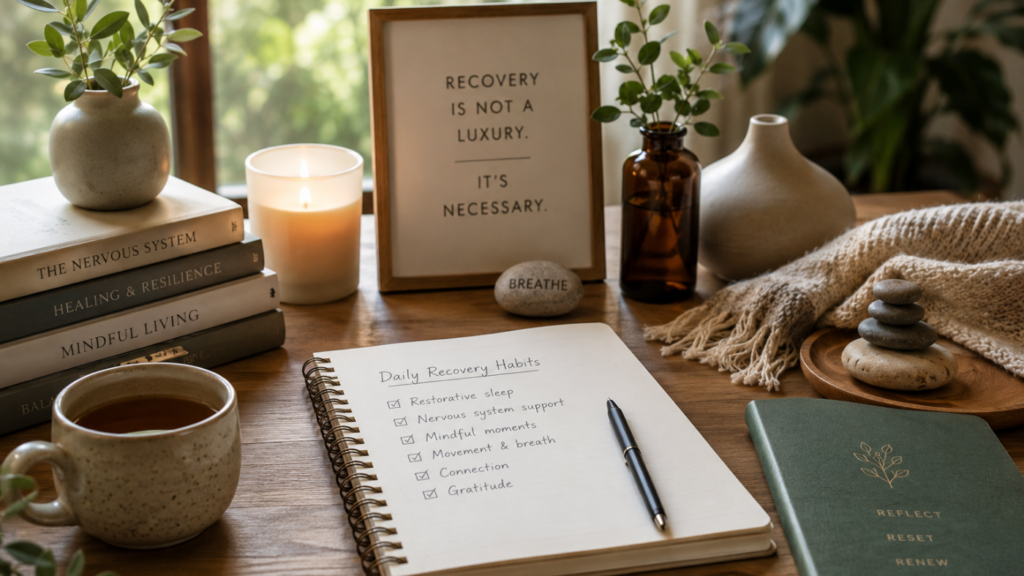
Stress recovery is more than occasional rest or temporary relaxation. It involves consistent practices that support emotional balance, restoration, and nervous system wellness over time.

Recovery may include:

  • Restorative rest and sleep support
  • Nervous system regulation and stress awareness
  • Mindful recovery practices and lifestyle balance
  • Emotional recovery and resilience

Many wellness practitioners now view recovery as an essential part of long-term well-being — not just something addressed during burnout or exhaustion.

The Modern Recovery Deficit

Modern lifestyles often leave little room for true restorative recovery. Constant digital connectivity, ongoing productivity pressure, emotional overwhelm, overstimulation, poor sleep habits, work-related stress, and limited downtime can all make it difficult for the body and mind to fully reset.

Over time, chronic stress without adequate recovery may contribute to emotional fatigue, cognitive exhaustion, reduced resilience, and burnout. As awareness continues to grow, many individuals are beginning to recognize recovery itself as an essential part of long-term wellness and overall well-being.


Stress Recovery and Cognitive Wellness

Stress recovery plays an important role in cognitive wellness and emotional balance.

Prolonged stress may influence:

  • focus and concentration
  • emotional regulation and resilience
  • cognitive clarity and energy levels
  • sleep quality and nervous system balance

Many wellness approaches now support healthier recovery patterns that promote both emotional and cognitive well-being.

Supportive Recovery Practices

Many wellness-centered recovery practices focus on slowing down, reducing overstimulation, and creating space for restoration within daily life. These approaches often include restorative movement, mindfulness practices, sleep-focused recovery, breathwork, and emotional wellness support.

Nervous system-informed wellness approaches, intentional downtime, and sustainable lifestyle habits are also becoming more common within recovery conversations. Together, these practices are increasingly being integrated into broader discussions around wellness, resilience, and long-term well-being.


The Future of Recovery and Wellness

As burnout and chronic stress continue to affect modern life, stress recovery is becoming an increasingly important part of whole-person wellness conversations. The future of recovery-focused wellness may include:

  • greater awareness around restorative health
  • nervous system-informed wellness education
  • sustainable lifestyle and resilience support
  • community-centered recovery practices

Stress recovery is not about avoiding responsibility or eliminating stress entirely. It is about building healthier relationships with rest, resilience, recovery, and sustainable well-being.

Explore Stress Recovery Resources

Discover wellness guides, educational resources, provider insights, and supportive practices focused on recovery, resilience, and nervous system wellness.

Join The Network